On a rope packing floor, color is the first thing you read — long before construction, diameter or material. Rows of the same 3-strand polyethylene rope stand in blue, green, red, yellow and orange because buyers keep ordering all of them: visibility orange for safety lines, green for garden and farm channels, blue for general utility and marine counters, natural white where a clean look or a printed label does the selling.
That visibility cuts both ways. Buyers over-read color (assuming a black coil is more weatherproof, or that a “nicer” shade means a better rope) and under-specify it (writing just “blue” into an RFQ and discovering, three repeat orders later, that every shipment was a slightly different blue). This guide is the middle position: what color actually changes in a rope, what it does not, what tracer strands are for, and how to write color into an RFQ so the quotation — and every repeat order — comes back the way you expected.
Why one construction comes in so many colors
The color of a PE or PP rope is set before the rope exists: pigment concentrate (masterbatch) is dosed into the polymer as the yarn is extruded, so each color is a dosing decision on the same production line — not a different product. The same 3-strand construction, at the same diameter and lay, runs in a dozen colors; the photos below are all one construction family.
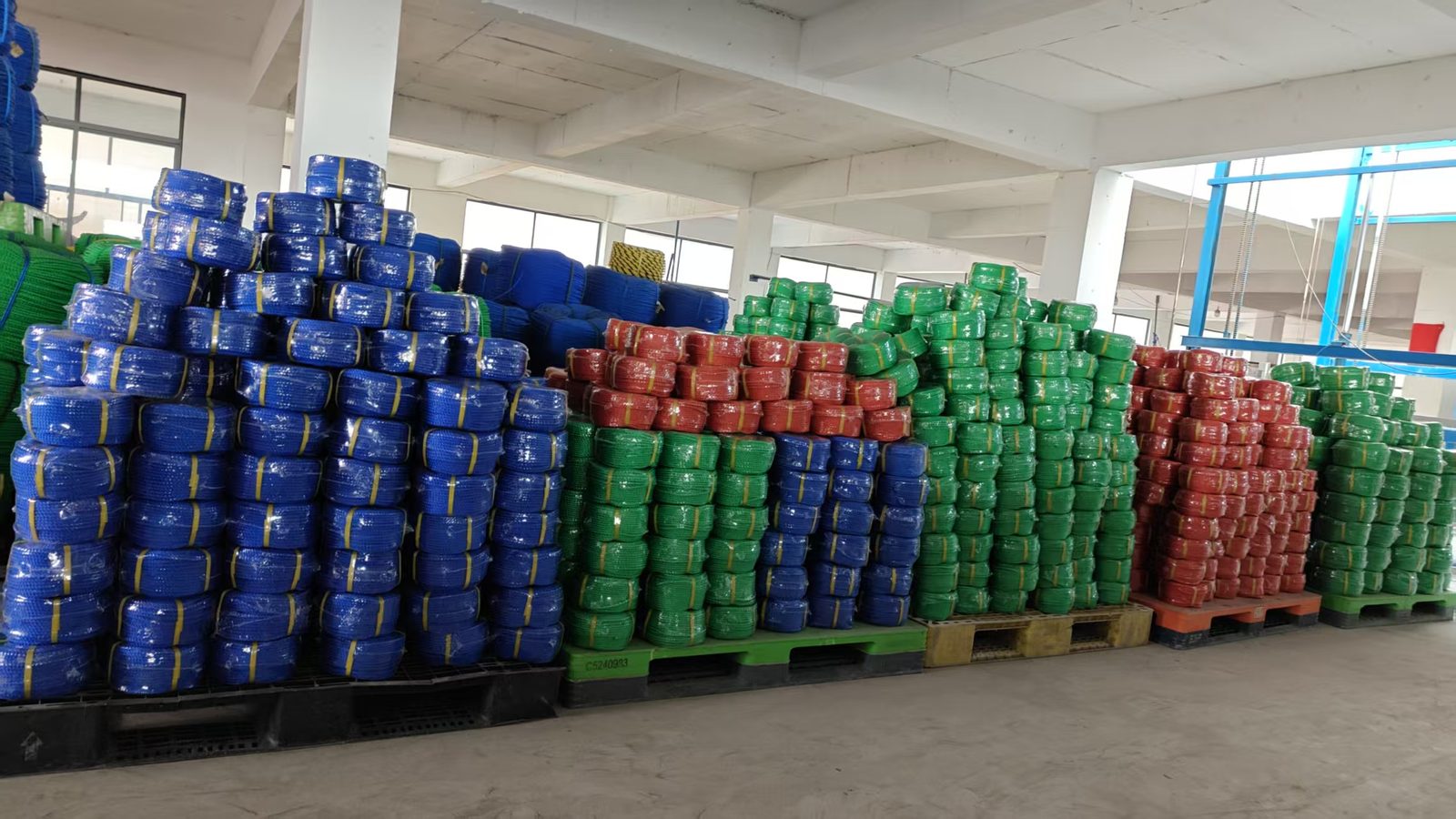
The color conventions buyers work with are market habits, not standards — orange where the line must be seen, green where the customer is a garden or farm channel, blue as the default general-purpose shade, natural where cost or label print dominates. None of them changes the rope’s mechanics. They change who picks it up off the shelf.
What color does not change
Strength is geometry and material: the yarn form, the strand count, the twist and the lay. Repainted in a different masterbatch, the same construction carries the same load. Within one supplier’s range this is a safe rule of thumb — the same line wound in blue and in green is the same rope.
Across suppliers it stops being a rule and becomes a trap: a cleaner, brighter blue says nothing about what is inside the coil. The fields that decide strength and runlength are the ones covered in how rope and twine are measured — material, yarn form, construction, diameter, weight per metre — and the reason two nominally identical coils can quote differently is the subject of why two “10mm ropes” differ. Read color as an identification and marketing field, and compare those mechanical fields directly.
Where color does matter: UV, with one catch
Sunlight — not color — is what destroys an outdoor rope. The fiber ranking and the stabilization logic are covered in which rope is best for outdoor use. Color enters the picture in three specific ways:
- Carbon black is the strongest single UV blocker in polyolefins. It absorbs and scatters the UV that drives photo-oxidation, which is why black dominates in long-exposure polymer products. But the protection depends on loading level and dispersion quality — a poorly dispersed or under-dosed black is a black-colored rope, not a protected one (Cabot, UV weatherability).
- Pigment and stabilizer interact. Weathering studies show pigments can either slow degradation or — for some pigment chemistries at some loadings — accelerate it, altering how deep UV damage penetrates the section (Turton & White, Polymer Degradation and Stability, 2001; see also the 2024 weathering review on PMC). In practice this means color and UV package are two separate specification lines: order “black, UV-stabilized”, never just “black”.
- Fading is information. UV attack discolors and chalks the surface as polymer chains break down (Yousif & Haddad, 2013). A coil that has visibly faded in the warehouse has been telling you its stabilizer package is thin. When a shipment arrives, an early-fading color is a fair reason to ask harder questions about the UV package in the next order.
None of this says bright-colored rope is a bad buy — most colored PE rope runs a UV-stabilized formulation when the buyer asks for one. It says UV performance is specified, not implied by shade. The electric fence guide makes the same point for fence line, where a colored jacket is exactly how the buyer first meets the product.
Tracer strands: identification you can see
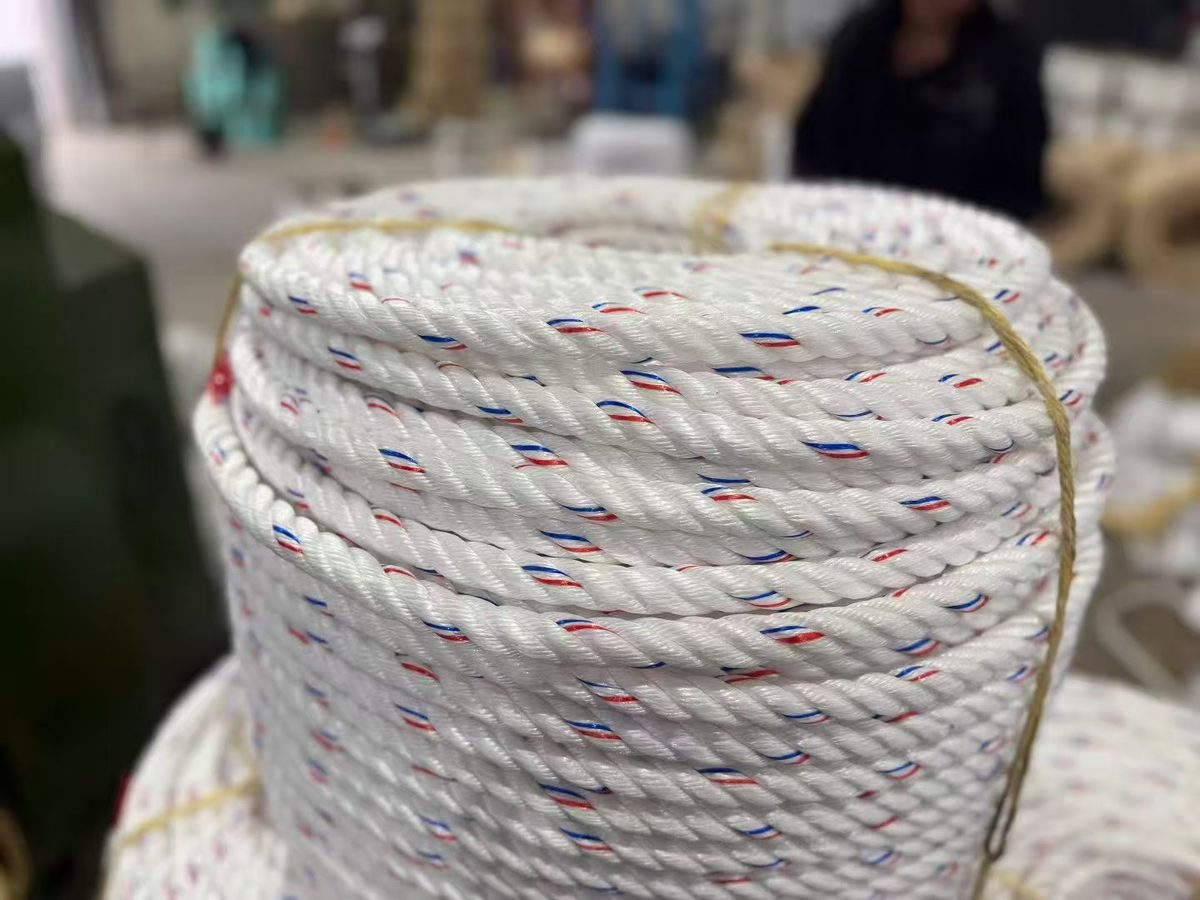
A tracer is a strand of contrasting color laid into the construction — one colored yarn twisted into a strand, or a second color spun in as a pair. It is one of the oldest identification tools in the trade, and the functions are the same across constructions:
- Maker and line identification. Wire rope producers have used colored strands for decades so a rope in service can be traced to its manufacturer (Mazzella’s explainer).
- Production year. In life-safety ropes, a tracer thread codes the year of manufacture so a retirement decision can be made on sight (Edelrid describes the practice).
- Consignment checking. In commodity PP and PE rope this is the everyday value: when cartons from different programs sit in the same container, a tracer lets the receiver confirm at a glance that the coils are the construction that was ordered — before cutting a sample or reading a label.
If you are matching an existing line, note the tracer explicitly — “blue with white tracer” is a usable field, “blue with some white in it” is not. The fuller method is in how to match an existing rope or twine sample.
Why color drifts between batches — and how buyers prevent it
Masterbatch is produced in lots. A repeat order that runs against a different masterbatch lot can land a visible step away from the previous shipment, even with the same formulation name. Product photos make this worse: screens and print shift color, so a photo is never the reference. The physical reference is.
The buyer-side protection is simple and cheap:
- When a color is approved, keep a sealed retained sample of the approved coil and say so — ask that repeat orders run against it.
- Express the tolerance in words that can be checked on receipt: “no visible difference from the sealed sample in daylight” is enforceable; “same blue” is not.
- For two-tone and tracer constructions, state the pattern as well as the colors — pattern alignment drifts the same way shade does.
Writing color into the RFQ: four modes that quote differently
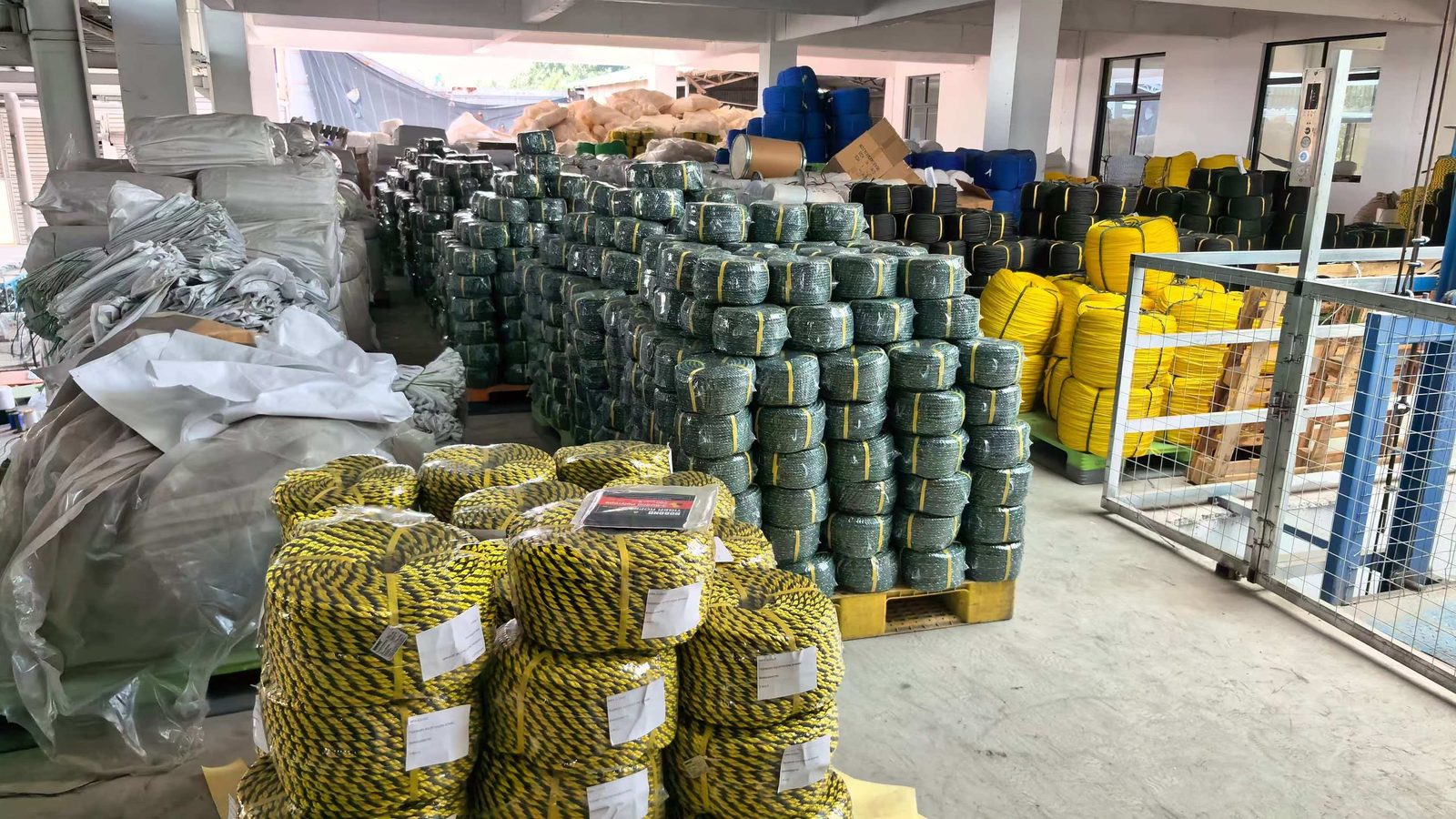
“Color: blue” produces a usable quotation only by accident. Color changes price and lead time through the work it triggers, so name the mode:
| Mode | What you write | What it means for the quotation |
|---|---|---|
| No preference | “any available color” | Supplier ships from running stock — fastest and cheapest |
| Standard range | “blue” / “green” / “orange” from the supplier’s standard shades | Normal production, no masterbatch changeover |
| Matched color | Pantone reference or sealed sample | Target and tolerance confirmed against the actual specification before price is final |
| Assorted colors | Mixed shades per carton, ratio stated (e.g. 1:1:1) | Standard for retail programs; the ratio is the specification |
Two fields travel with the color on any retail SKU: the diameter and the pack. The labeled mini-coils below are the everyday example — color, nominal diameter and coil format all read off the unit, which is what a shelf SKU has to do.
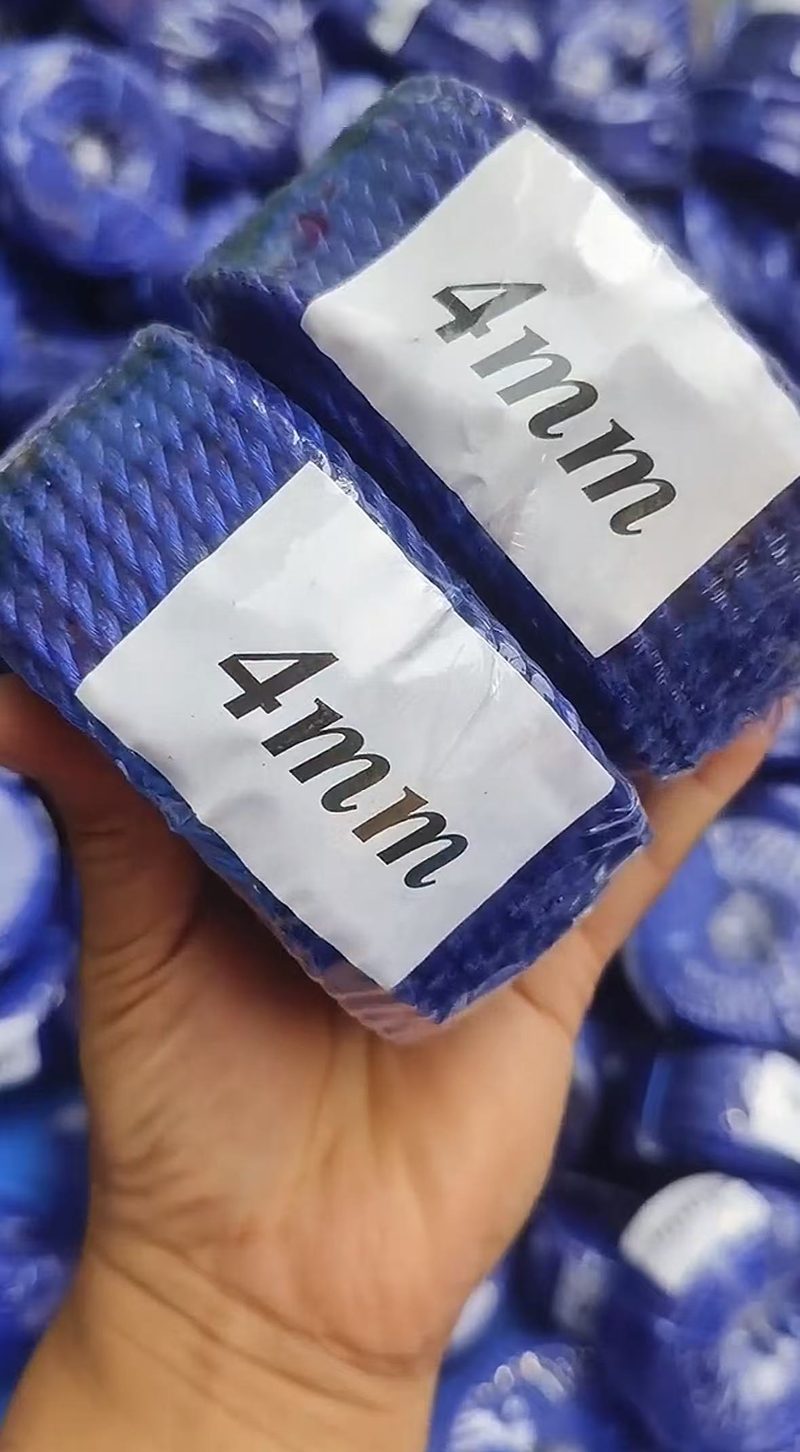
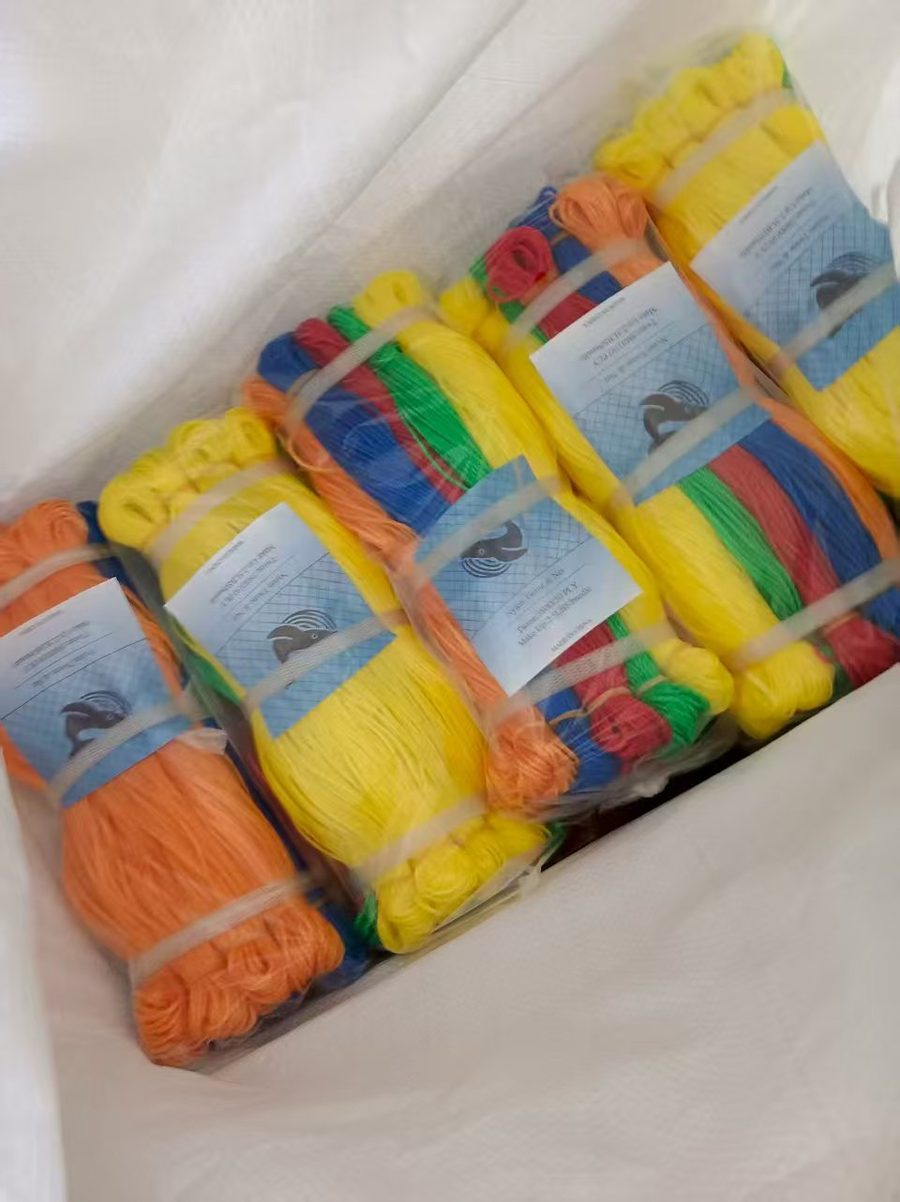
Where the color is the brand — a matched shade, a two-tone, a private-label range — the color field and the label artwork need to be settled together, because the masterbatch and the print have to agree on what the SKU looks like. That process is walked through in private-label cordage: define the rope and the pack together.
The everyday retail range this guide draws its photos from — PE 3-strand twisted rope in green, orange, blue and natural, with custom shades on request — is the closest product page; its PP twin carries the same color logic on PP 3-strand twisted rope.
Sources and further reading
- Cabot Corporation — Specialty carbons for UV weatherability (carbon black effectiveness and dispersion)
- T.J. Turton, J.R. White — “Effect of stabilizer and pigment on photo-degradation depth profiles in polypropylene”, Polymer Degradation and Stability 74 (2001)
- M.C. Nzimande et al. — “A review of weathering studies in plastics and polymers”, 2024 (open access)
- E. Yousif, R. Haddad — “Photodegradation and photostabilization of polymers”, SpringerPlus 2 (2013) (open access)
- Mazzella Companies — Identifying wire rope by color strand
- Edelrid — Static ropes: from fibre to rope (year-of-manufacture tracer threads)
Turning color into a specification
Color costs nothing to specify and is expensive to get wrong on arrival. Put the mode (no preference / standard / matched / assortment), the UV package and the packaging in the same message and the quotation that comes back is comparable — the structured RFQ form walks through those fields, and the full field-by-field checklist is in how to specify rope for an RFQ.